
Create a crisp silhouette
Advanced Illumination backlights
We offer a variety of backlighting to provide an area of uniform illumination. Browse our backlighting products and inquire with us to learn more today.
Explore
Partner supplier
Cadence Automatisation is an official distributor of Advanced Illumination products in Québec.
View the official rangeAbout
Advanced Illumination offers LED lighting designed to reveal the contrast useful to a vision application. Part shape and finish, camera geometry, speed and the feature to reveal guide the choice between backlighting, bright field, dark field, diffuse, coaxial or linear lighting. Cadence can help frame these parameters before a family is selected.
Cadence selection
Explore Advanced Illumination families and identify the technologies suited to your application.
Create a crisp silhouette
We offer a variety of backlighting to provide an area of uniform illumination. Browse our backlighting products and inquire with us to learn more today.
Explore
Aim light at the inspection area
As a leader in the machine vision lighting industry, we offer a variety of bar lights, also known as linear array lights. Browse our products online.
Explore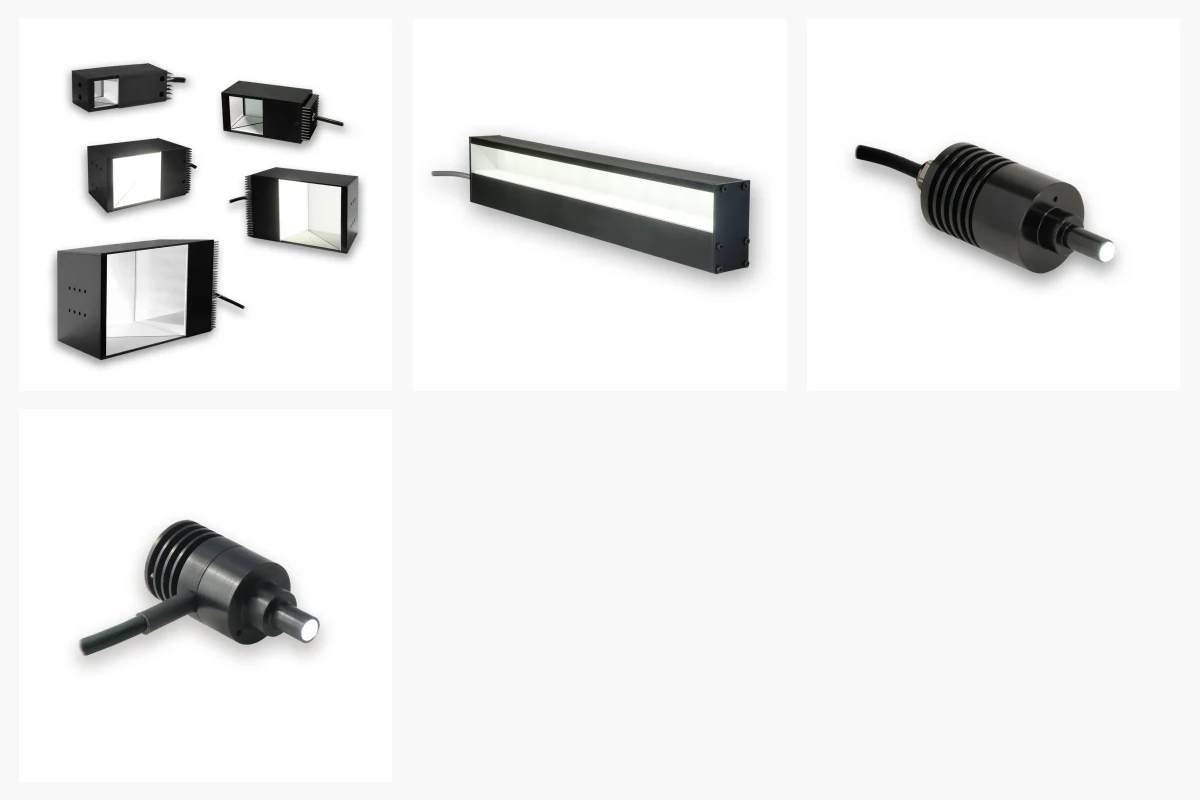
Reveal flat reflective surfaces
Coaxial lights from Ai emphasize surface texture and edge definition on non-curved, reflective objects in machine vision inspection. View our coaxial lights now.
Explore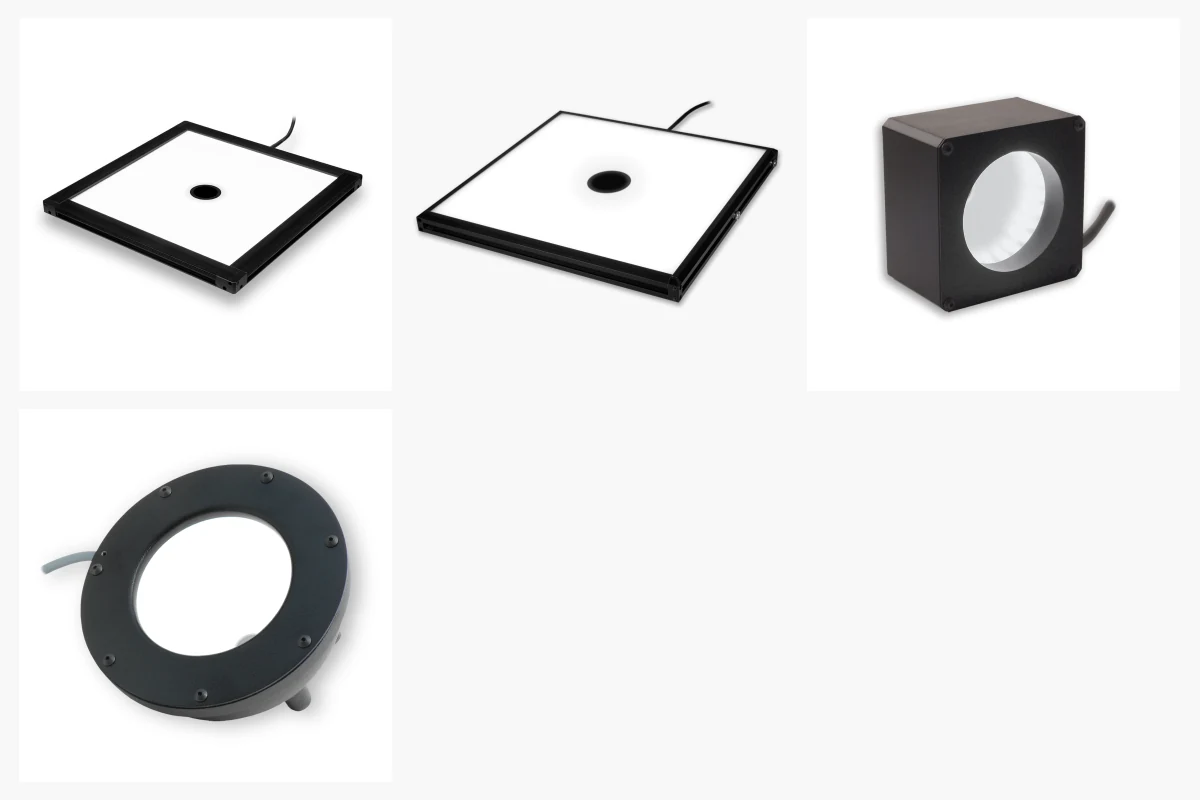
Evenly light curved or glossy objects
Browse through a variety of diffuse lighting provided by machine vision dome lights such as our back-lit, edge-lit, wide linear diffuse lights and more.
Explore
Concentrate energy on one line
Advanced Illumination offers a variety of LED line lights for your application requirements. Browse our line lights for different intensities and more.
Explore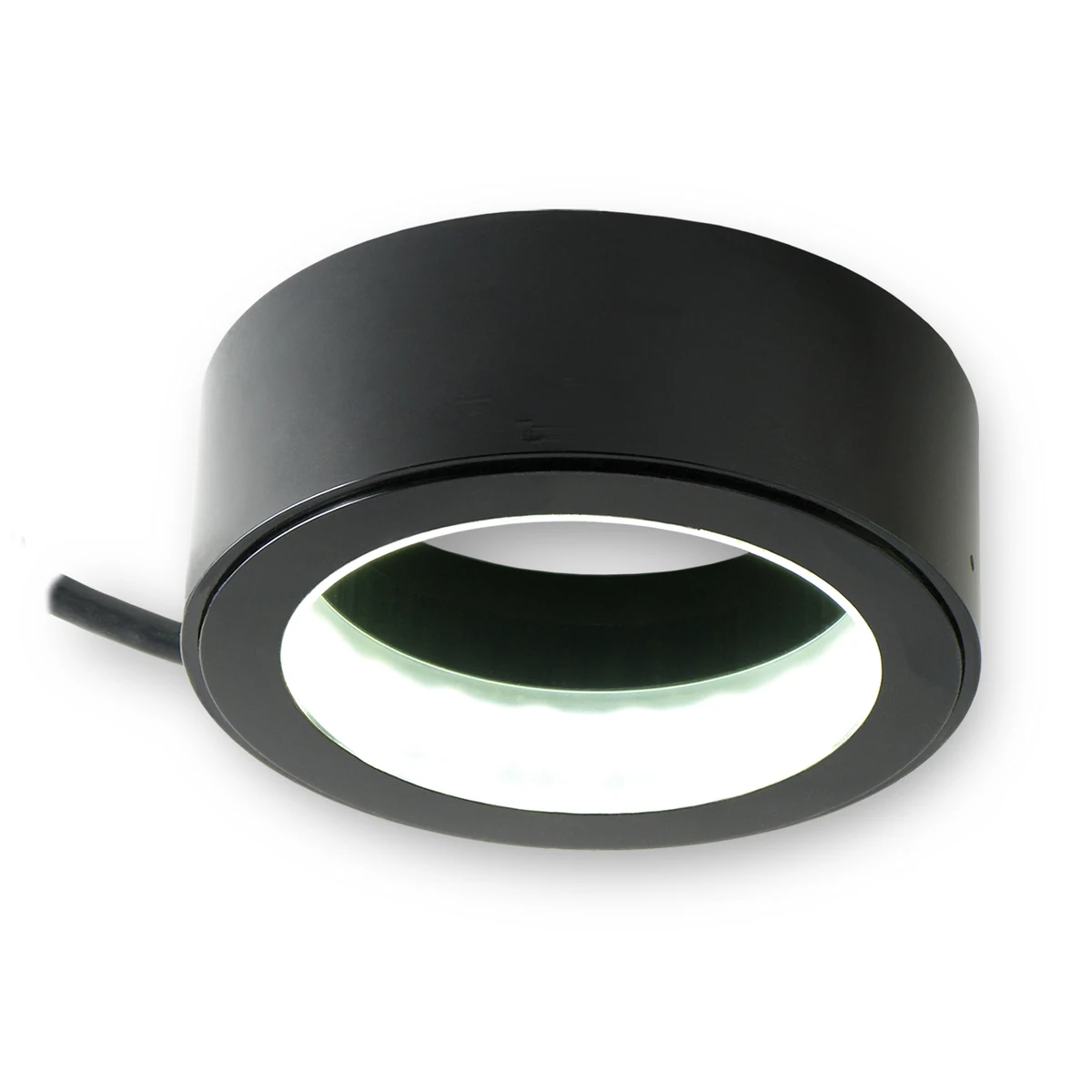
Highlight defects and edges
We offer a variety of dark field ring lights to provide illumination projected at a shallow angle. Browse our dark field ring lights for your application now.
Explore
Illuminate directly around the lens
We offer a variety of bright field ring lights that provide illumination directly onto an object at different angles. Browse our product range & inquire.
Explore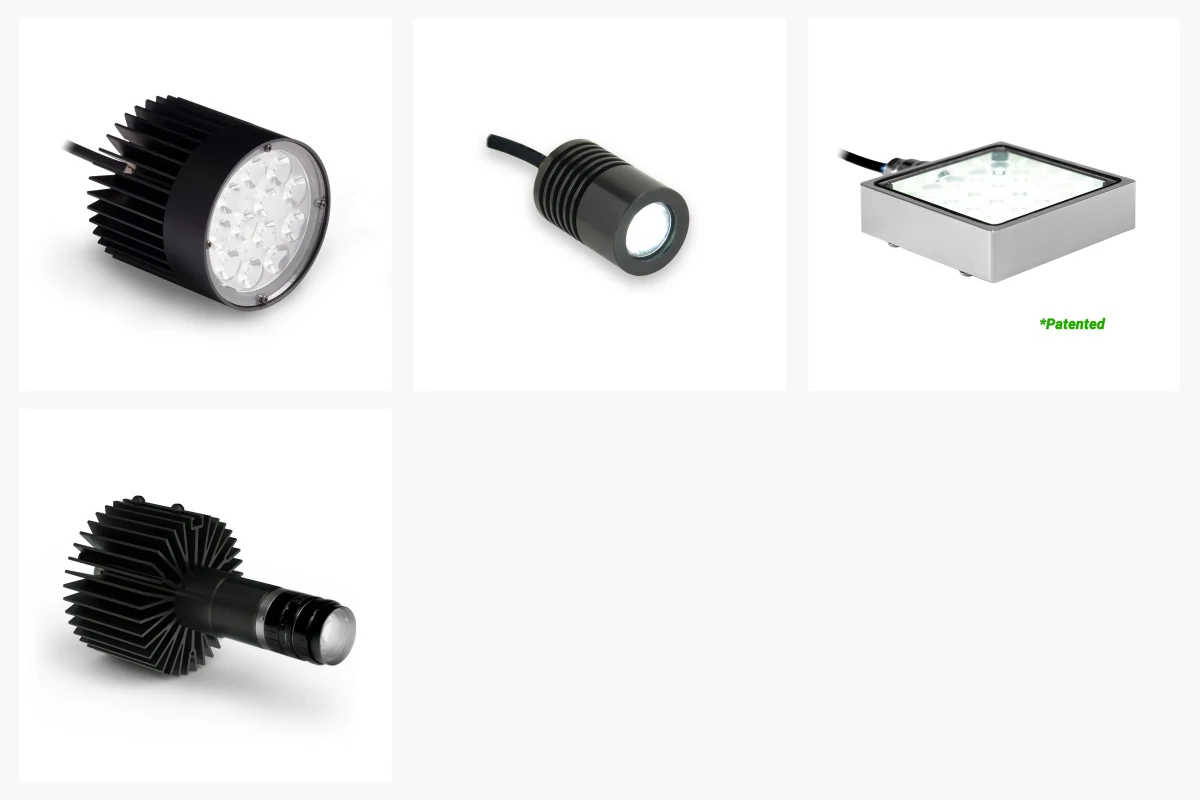
Concentrate or structure light
Typically characterized as a general-purpose illuminator, spot lights create both bright and dark field effects. Learn more about our spot lights here.
Explore
Synchronize intensity and exposure
Advanced Illumination offers a variety of machine lighting controllers for your application requirements. Learn more about our light controllers here.
Explore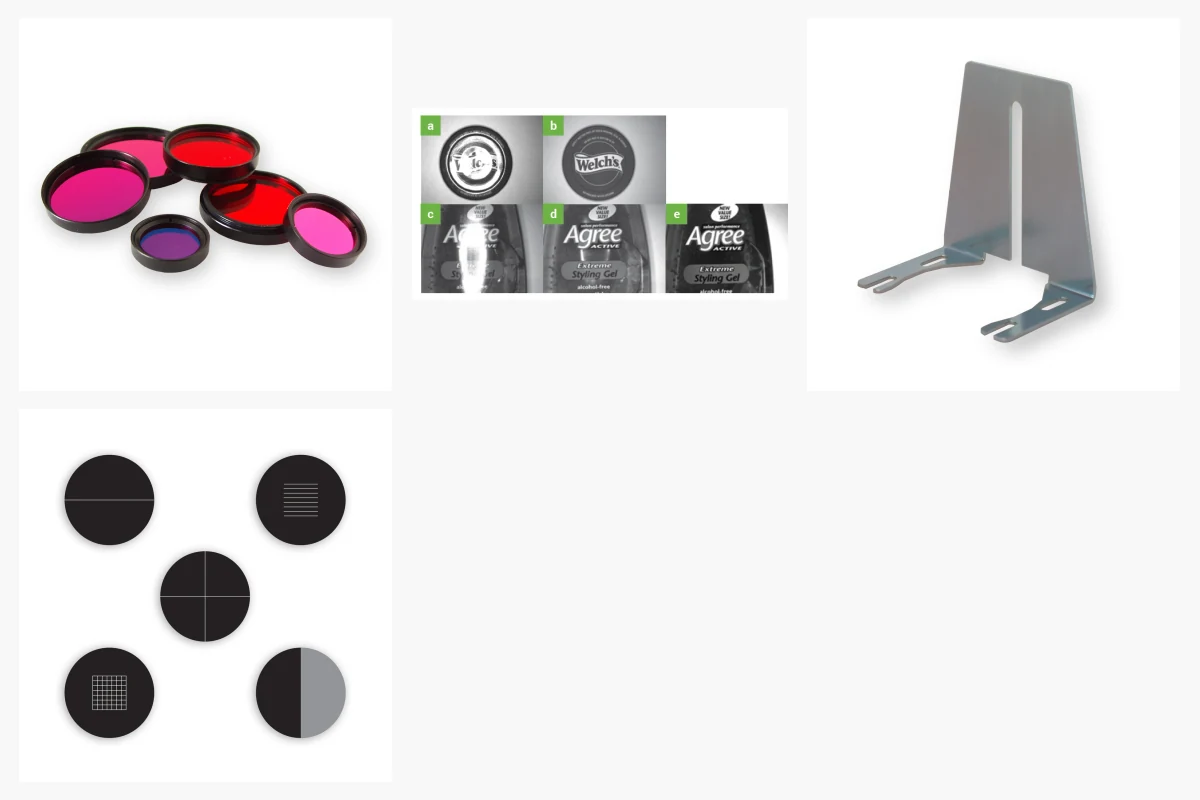
Complete the lighting chain
View machine vision lighting accessories here. Advanced illumination offers custom product design. Get more information by contacting our team today.
ExploreSelection guide
Two similar parts can need very different lighting based on surface, color, relief and motion. Selection should start with the detail to reveal and the camera-light-part orientation, then be validated with a representative image.
Create a crisp silhouette
A backlight places the part in front of a uniform source to create a high-contrast silhouette. This geometry is useful for checking a contour, presence, orientation, opening or dimension when the part edge carries the important information.
Choose when silhouette or profile, rather than the front surface, must guide the decision.
Aim light at the inspection area
Bar lights provide directional light over an elongated area or large part. Their angle and position can reveal relief, texture, an edge or a defect that uniform frontal lighting would reduce.
Compare when light-incidence angle can improve contrast for the feature sought.
Reveal flat reflective surfaces
Coaxial lighting approaches along the camera axis to observe a flat or specular surface with controlled geometry. It can help stabilize an image of a mark, engraving or detail on a reflective part when stray reflections must be managed.
Consider for sufficiently flat surfaces whose reflection must be controlled relative to the camera.
Evenly light curved or glossy objects
Diffuse lights and domes surround the part with light to reduce hard shadows and bright spots. They are often useful when a curved, glossy or complex shape must be inspected without each small angle change strongly changing the image.
Compare when reflections, curvature or position variation make directional lighting unstable.
Concentrate energy on one line
Line-scan lights are designed to illuminate a narrow line while a product or material moves past. They are relevant when inspection concerns a web, continuous surface or moving part and acquisition must remain consistent across the observed width.
Use when width, web speed and direction of movement structure the image to acquire.
Highlight defects and edges
A dark-field ring projects light at a low angle so surface relief and defects return more light toward the camera. This approach is useful when a scratch, edge, engraving or texture must stand out against a background that remains subdued.
Use when the sought feature locally changes the surface rather than its overall color.
Illuminate directly around the lens
Bright-field rings directly illuminate the observed area around the camera axis. They offer a versatile solution for creating a readable image of small objects, codes, marks or features whose contrast depends on even frontal lighting.
Consider when the camera must see the part face with relatively uniform light and mechanical access is available.
Concentrate or structure light
Spot lights concentrate illumination on a precise area or serve as a source for a particular optical geometry. They can be compared when space is limited, a targeted zone needs more light or a projected pattern helps interpret part shape.
Use when the region of interest is localized or projection optics are part of the solution.
Synchronize intensity and exposure
A lighting controller connects the LED source to the acquisition cycle: intensity, triggering, duration and sometimes brief overdrive. It becomes essential when camera and light must be synchronized, motion must be frozen or the application needs repeatable adjustment.
Select with the light and camera according to acquisition mode, cycle and required power.
Complete the lighting chain
Filters, polarizers, diffusers, collimators and mounting accessories change how light reaches the part and returns to the camera. They can address reflections, tighten a geometry or secure an installation when the light alone does not create the desired image.
Consider after precisely identifying the image problem so it complements rather than masks an unsuitable geometry.
Applications
Lighting is a system component: its role must be defined with optics, camera, part and automation decision. These applications illustrate the questions to address.
Dark-field, diffuse or coaxial lighting can be compared when texture, a scratch, an edge or a reflective area must stand out.
Explore industrial applicationsA stable image helps read a mark, verify a label or confirm presence on a line where brightness and position variations matter.
Explore food-industry applicationsLine lights and strobing are evaluated when speed, field width or motion call for a different acquisition approach.
Explore OEM solutionsCadence guidance
Cadence can help structure a lighting trial around the part and image sought: defect or detail to reveal, surface, background, speed, mechanical space and triggering. This avoids treating lighting as an accessory after the camera has been chosen.
Sources
Lighting families and principles are cross-checked against the manufacturer’s official catalogue and technical guide.
Lighting project
Share an image of the part, the detail to inspect, throughput and available space. Cadence can help target a lighting geometry before final selection.