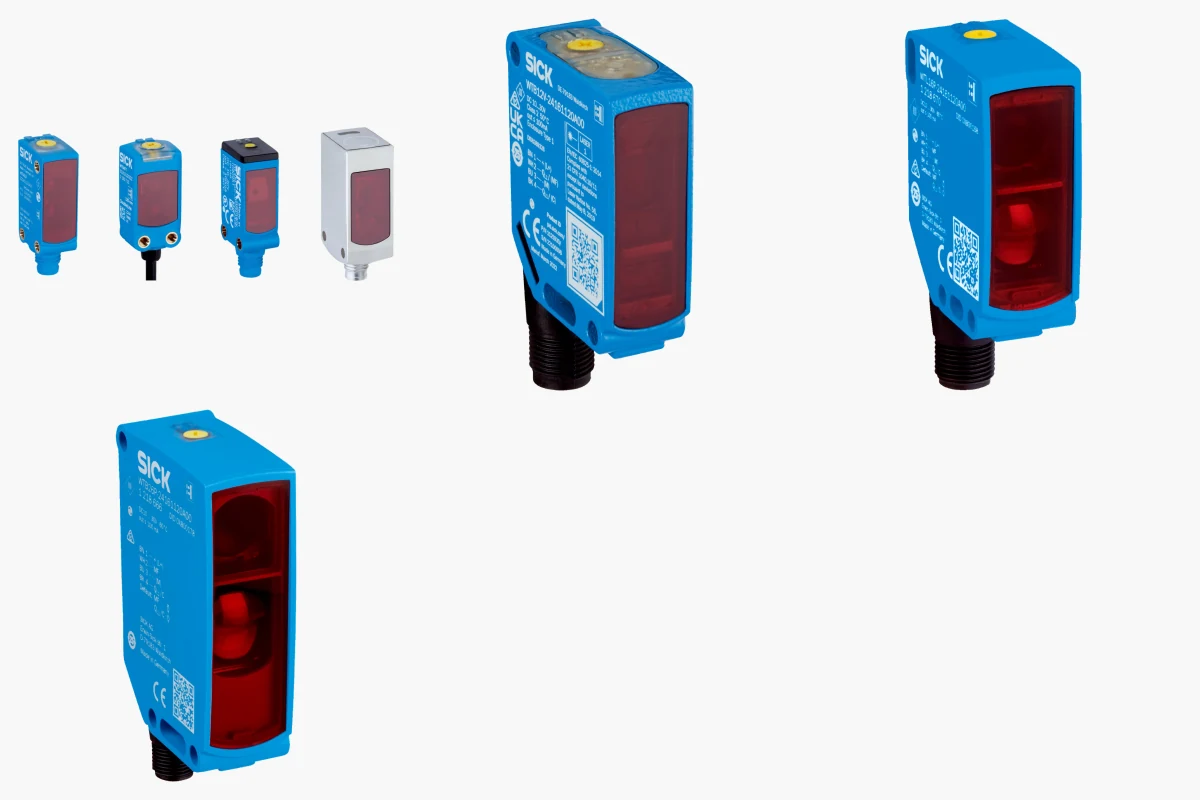
Detect without contact
SICK photoelectric sensors
Select optical principle, range, housing, background suppression and connectivity for the target and environment.
Explore
Partner supplier
Cadence Automatisation is an official distributor of SICK products in Québec.
View the official rangeAbout
SICK offers sensing and automation technologies covering presence, position, distance, identification, vision, fluids and machine safety. To select them well, start with the object, environment, speed, required information and the sensor’s role in the machine decision.
Cadence selection
Explore SICK families and identify the technologies suited to your application.
Detect without contact
Select optical principle, range, housing, background suppression and connectivity for the target and environment.
Explore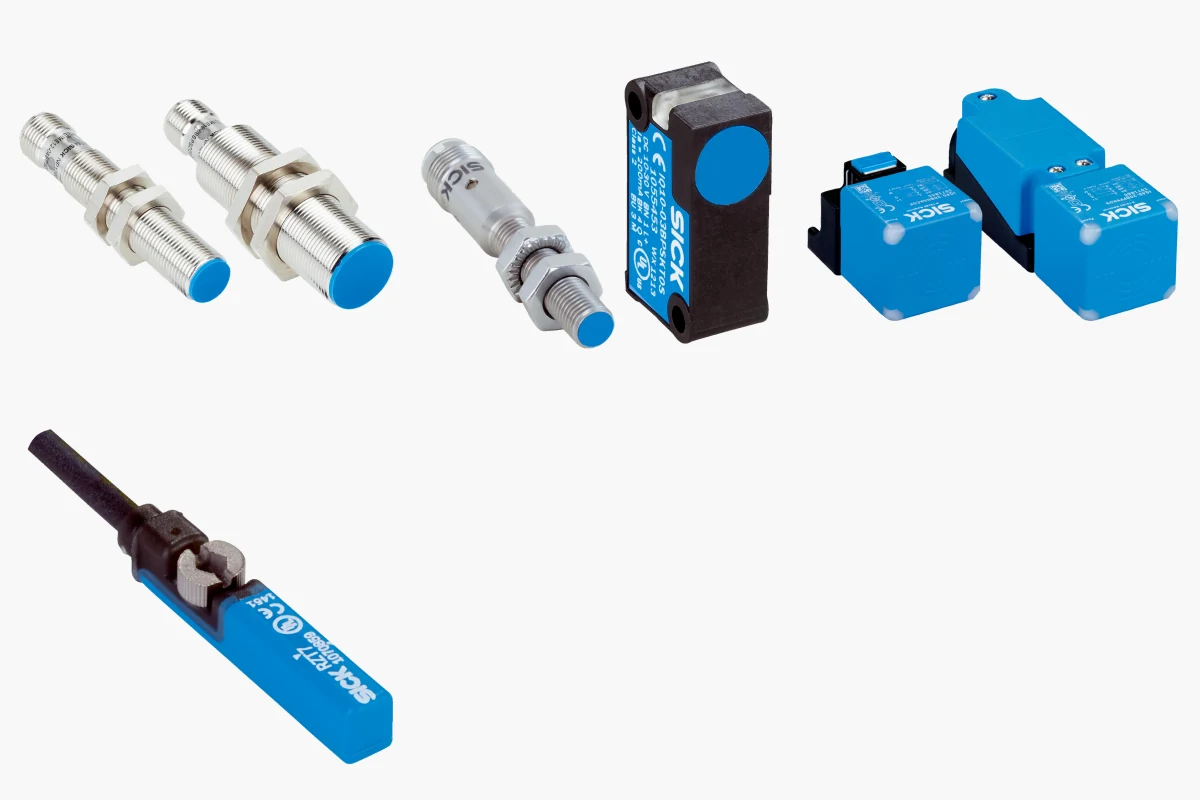
Confirm presence
Inductive, capacitive and magnetic sensors for industrial position and presence detection.
Explore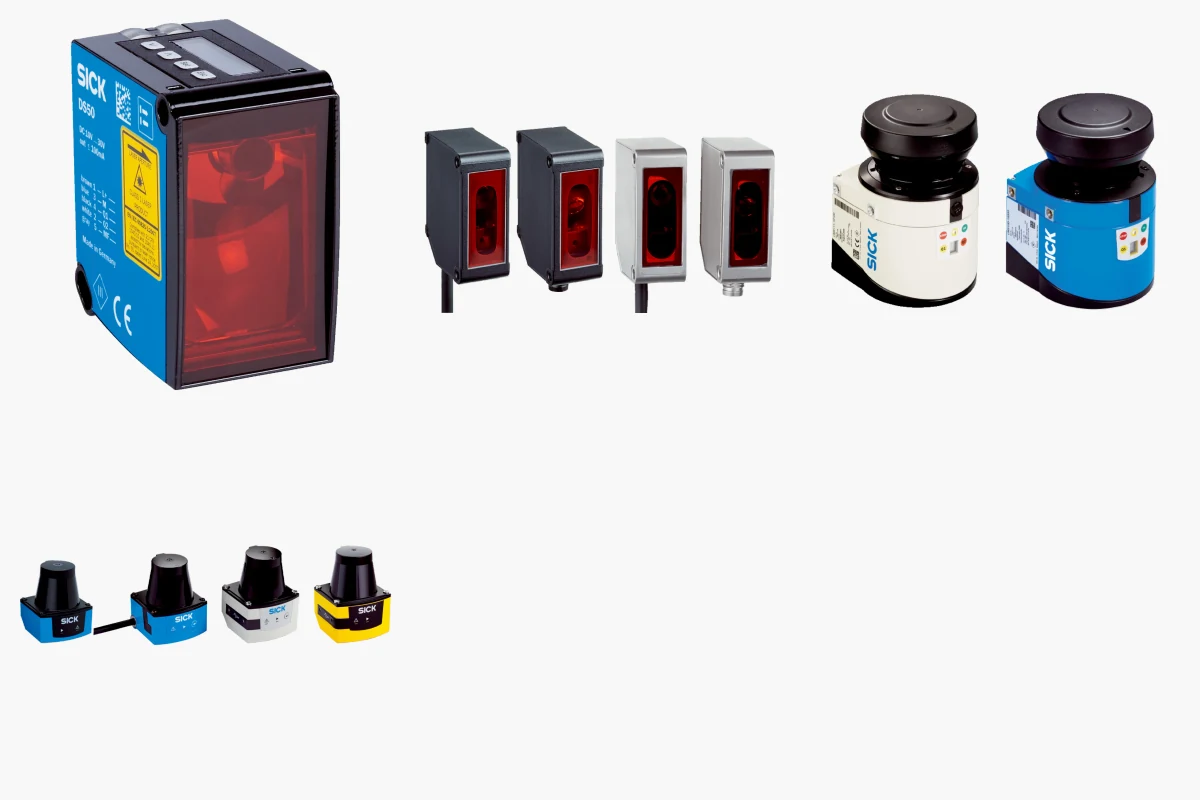
Measure distance
Guide selection by range, repeatability, target, ambient light, measurement rate, scan field and interface.
Explore
Make motion measurable
Incremental, absolute, linear, motor-feedback encoders and industrial inclination sensors.
Explore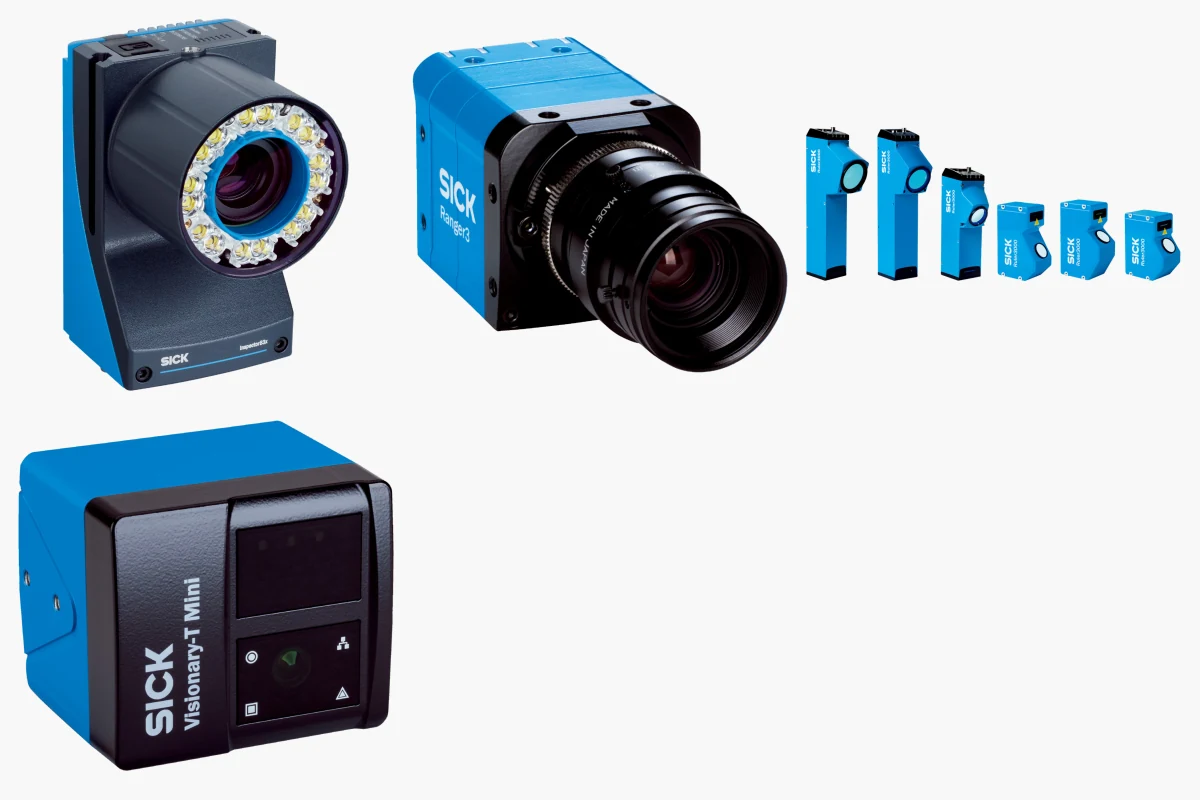
Inspect in 2D and 3D
Vision sensors, cameras and systems for inspection, measurement, localization and robot guidance.
Explore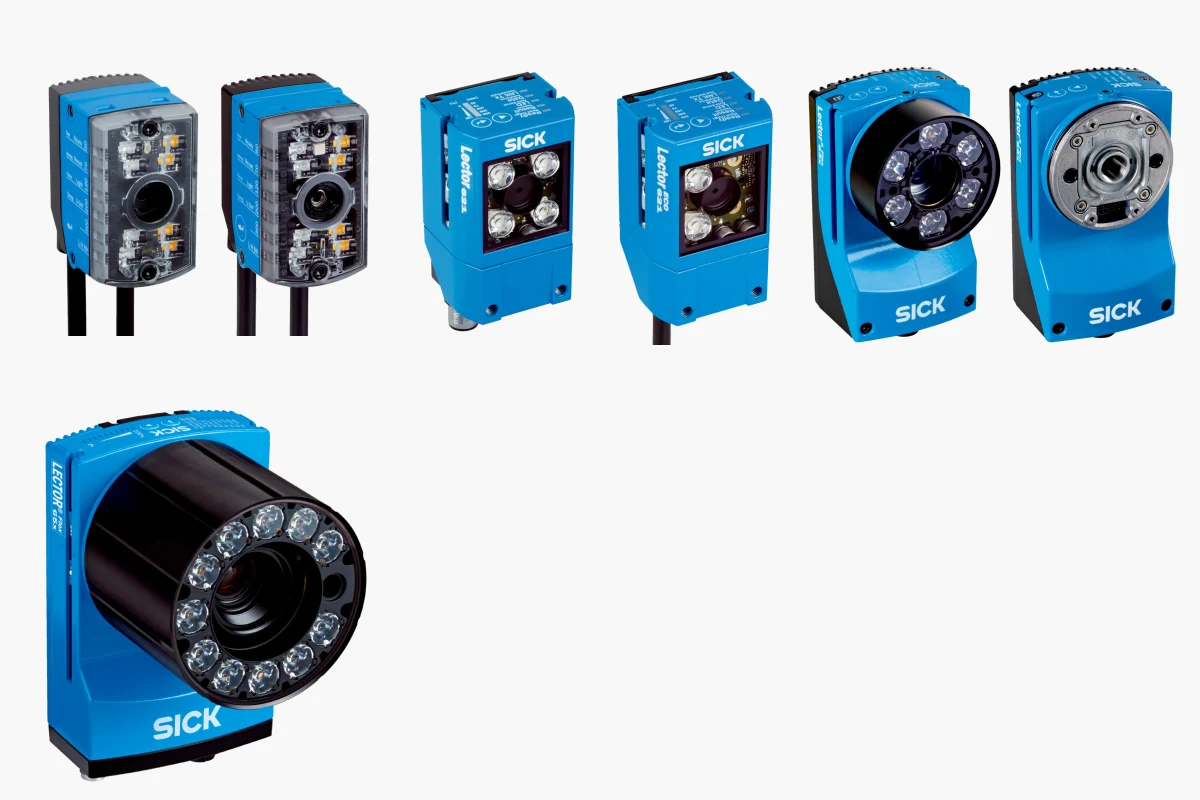
Read, identify, trace
Structure reading by code type, distance, speed, direct marking, coverage, network and traceability requirements.
Explore
Protect people and processes
Selection begins with risk assessment, safety function, zone, distance, stopping time and required performance level.
Explore
Monitor the process
Pressure, flow, level and temperature measurement for pneumatics, hydraulics and process systems.
ExploreSelection guide
The same object can be detected, measured, read or inspected in several ways. A technology becomes relevant when it produces useful information for the machine with an implementation compatible with the environment and production cycle.
Detect without contact
Photoelectric sensors use light to detect an object and are commonly used to confirm presence, position or passage. The sensing principle, object surface, background, distance and environment should be established before choosing a model.
Use for presence, counting, positioning or object control when the optical geometry can be managed.
Confirm presence
Inductive, capacitive and magnetic sensors respond to different materials and installation conditions. They fit situations where a machine needs a reliable short-range presence or position signal, often near an actuator or moving element.
Use when material, range, flush or non-flush mounting and sensor access define the solution.
Measure distance
Distance sensors and LiDAR add spatial measurement to automation: distance, profile, position or zone detection. They matter when a machine must understand where an object, load or vehicle is rather than simply confirm its presence.
Consider range, field to cover, movement, reflectivity and the precision actually useful to the decision.
Make motion measurable
Encoders and inclination sensors turn rotary, linear or angular movement into position information for control. They are used when an axis, belt, mechanism or mobile machine must be tracked with an appropriate resolution, interface and environmental behavior.
Choose according to motion type, resolution, interface, coupling mechanics and how the controller uses feedback.
Inspect in 2D and 3D
Machine vision extracts more information than a binary sensor: feature presence, reading, measurement, localization or inspection. Selection should start with the image to obtain—lighting, optics, part, throughput and decision—before choosing a camera or vision sensor.
Use when the application needs a decision based on appearance, position, measurement or reading rather than a simple threshold.
Read, identify, trace
Code readers, RFID systems and identification tools create a link between a physical item and its digital information. They are useful when production, packaging or handling must confirm an item’s identity, orientation or journey without relying on manual entry.
Compare according to code or transponder type, marking quality, distance, speed and the data to transmit.
Protect people and processes
Light curtains, scanners, controllers and safety components help implement functions selected by a risk assessment. Technology does not replace that assessment: the zone, access modes, distances, stopping time and restart behavior must be considered together.
Address this family after defining hazards, access, operating modes and requirements applicable to the project.
Monitor the process
Fluid sensors make visible the quantities that influence a process, pneumatic supply or hydraulic system. They are relevant when a machine must confirm a condition, track a drift or provide a value usable by control and maintenance.
Select according to fluid, measurement range, connections, temperature, pressure and the information actually to be used.
Applications
Use cases range from presence detection on a conveyor to protection of a robotic zone. The applications below show how to organize the initial conversation without presuming a final configuration.
Detection, code reading and distance measurement can help follow an item’s movement, confirm a position or feed traceability within a material flow.
Explore handling applicationsSensors, vision and safety components should be considered together when a machine must detect, guide, stop or resume a cycle based on its real state.
Explore OEM solutionsFlow, pressure, level and temperature measurement, along with robust detection, can be selected according to the medium, connections and maintenance information sought.
Explore heavy-industry solutionsCadence guidance
Cadence can help move from a need expressed as “detect,” “read” or “protect” to concrete criteria: object, zone, throughput, interface, environment and role in the cycle. This process connects SICK families to the intended integration.
Sources
Categories and technical terms are checked against official SICK pages; links remain with the manufacturer for current details.
SICK project
Describe the object, distance, environment, throughput and expected result. Those details help guide selection more reliably.