Motion and robotics technologies connected to the machine cycle
Yaskawa covers industrial robots, motion control, servos, AC DRIVES and machine controllers. These technologies make sense when they are connected to the part, load, cycle time, axes, communications and the equipment’s real operation.
Cadence selection
Yaskawa catalog structured by family
Explore Yaskawa families and identify the technologies suited to your application.
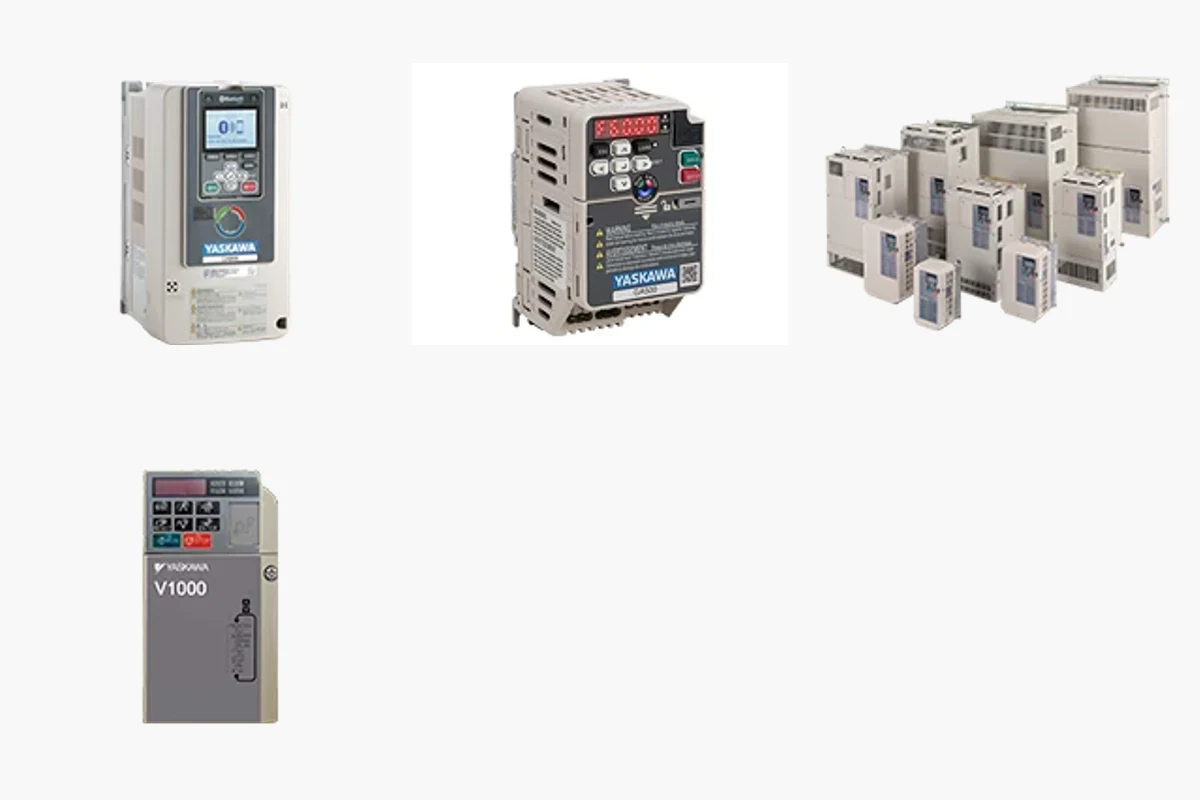
Yaskawa's Family of AC Drives are designed for industrial automation applications. These adjustable frequency drives are typically capable of network communications, supported by software tools for parameter management and able to accept custom software.
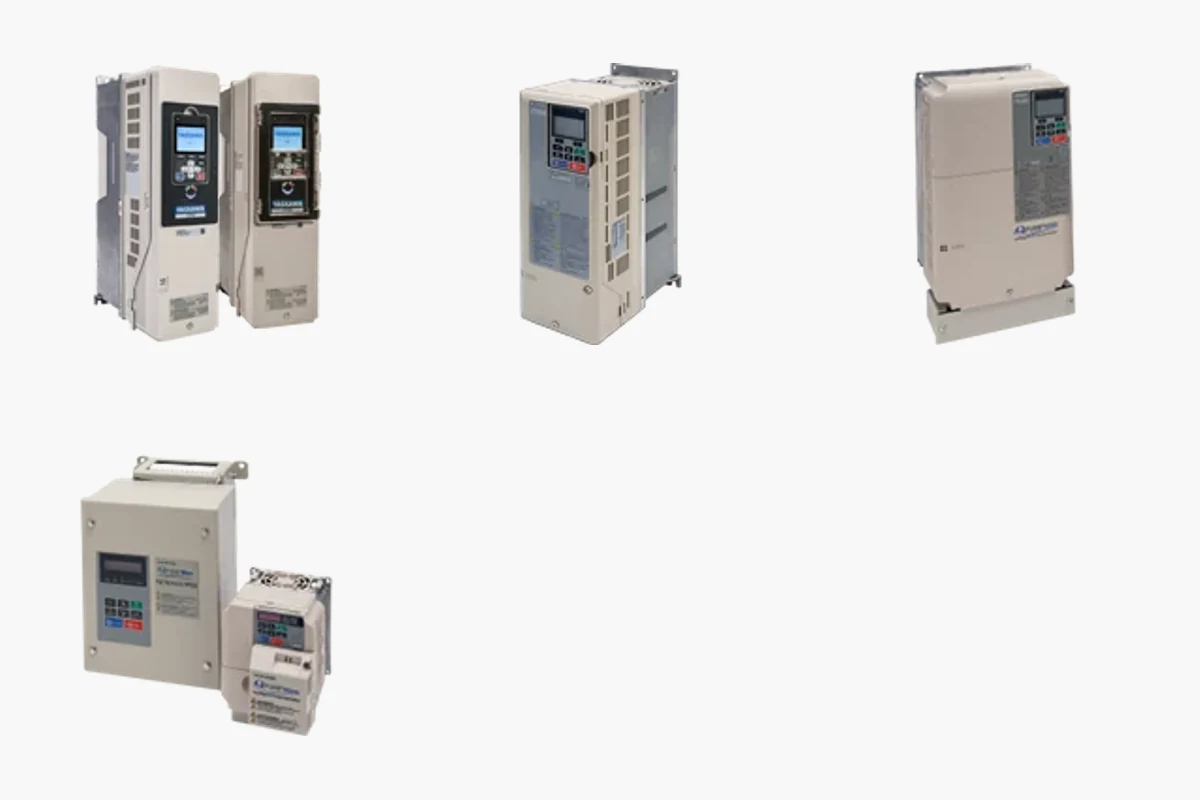
Yaskawa is the largest global variable frequency drives manufacturer with over 30 years of Building Automation System (BAS) and HVAC experience. Our HVAC Drive is designed for HVAC applications.
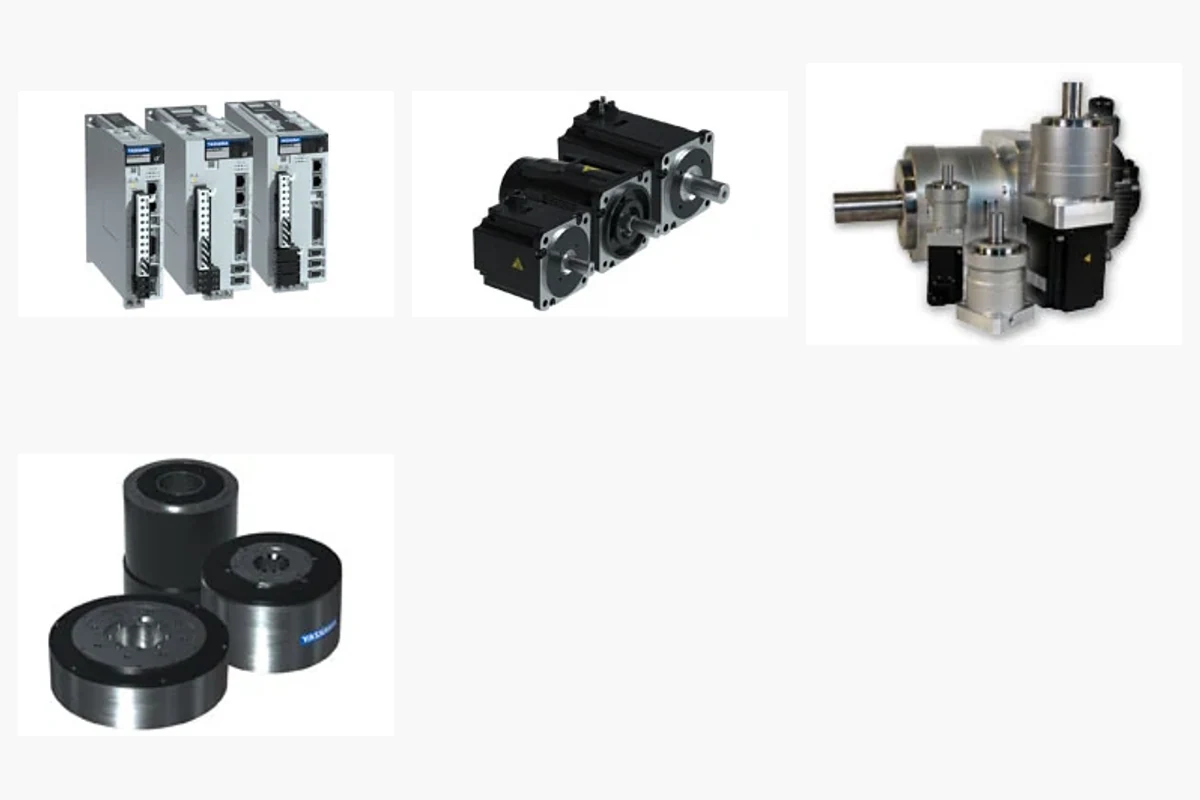
Sigma-7 products set a new industry standard in servo capability, with features that advance Yaskawa’s 25-year reputation for redefining the possibilities in motion automation.
Select a Yaskawa solution by motion, machine or process
The choice between a robot, servo, AC DRIVE or controller depends on more than power or axis count. It also requires understanding the task, dynamics, communications, cell safety and the equipment’s expected evolution.
AC drives control a motor’s speed and behavior in machine and process applications. They are useful when motor motion must adapt to a load, setpoint or sequence, with communications suited to the industrial architecture.
Key considerations
Adjustable motor control
Options for machines and processes
A foundation for industrial networks
When to use it
Compare according to motor, load, speed range, braking, supply and required network.
Drives dedicated to fan and pumping loads support loops whose behavior depends on flow, pressure, demand and operating efficiency. Selection should consider the load curve, process sensors and desired control method.
Key considerations
An approach suited to variable loads
Criteria tied to process and regulation
A foundation for comparing ventilation and pumping
When to use it
Use when a motor drives a pump or fan and process regulation matters as much as speed.
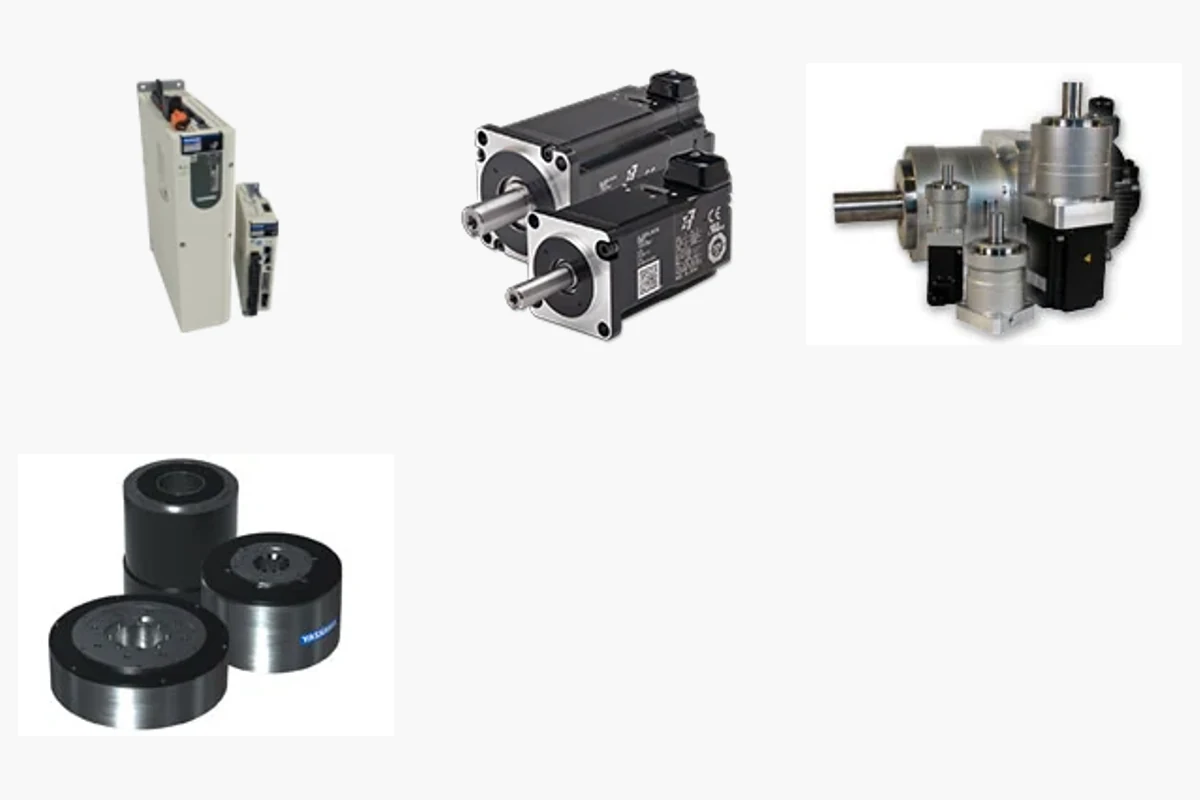
The Sigma-X family targets applications where servo, network and motion control must form a coherent whole. It is evaluated based on the axes to synchronize, mechanics, control architecture and how the machine must evolve.
Key considerations
An integrated approach to servo and motion
Criteria tied to synchronization
A foundation for multi-axis machines
When to use it
Consider when axis coordination, communications and commissioning are part of the problem to solve.
Sigma-7 servo systems pair motors and SERVOPACKs to execute controlled machine-axis motion. They are relevant when position, speed and axis response must be defined from the real load and mechanics.
Key considerations
A system for controlled axes
Rotary, linear and direct-drive options
Selection tied to load and dynamics
When to use it
Use when an axis must be sized with its transmission, inertia, cycle and controller.
Machine controllers coordinate the logic, I/O, motion and interfaces required by the cycle. They are relevant when a machine must grow from one axis to a more complete architecture without artificially separating control from equipment dynamics.
Key considerations
Coordination of logic and motion
Programming and HMI tools
A foundation for multi-axis architectures
When to use it
Consider according to axis count, I/O, communications, HMI and the functions the machine must centralize.
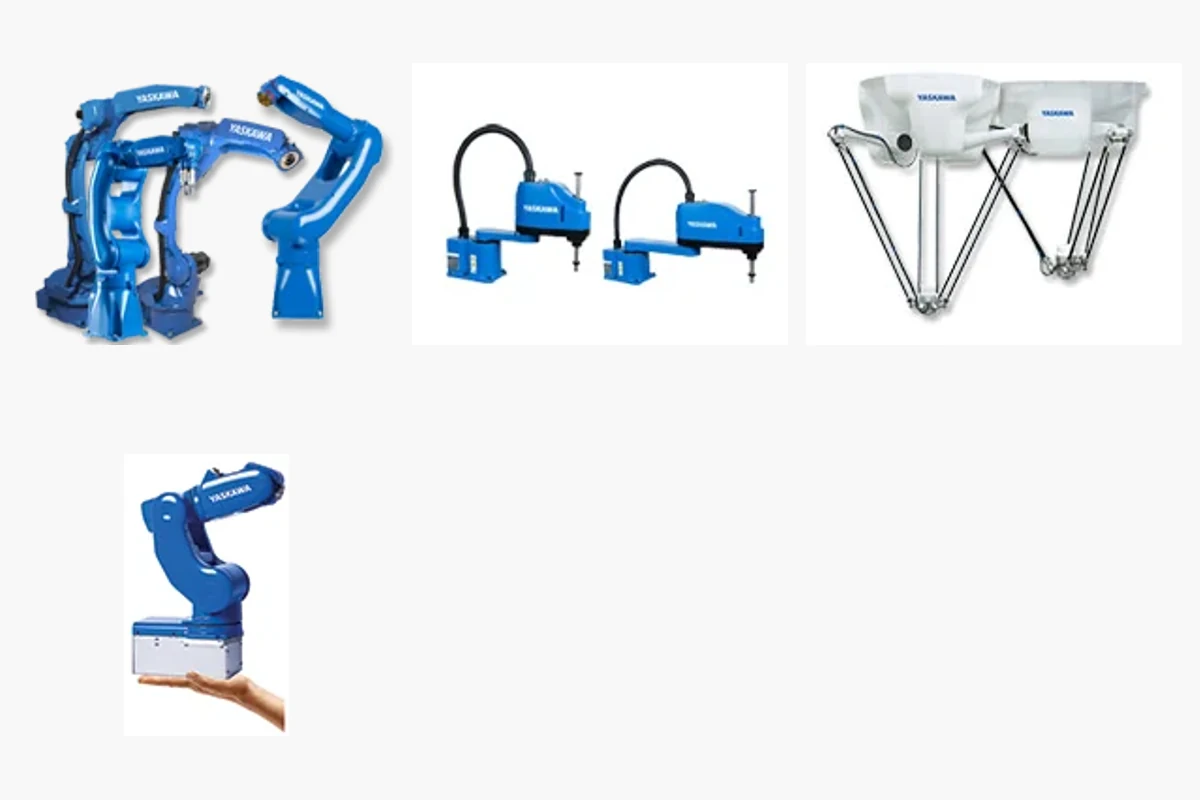
Industrial robots automate handling, assembly or process tasks with a path and repeatability suited to the cell. They should be studied with the tooling, part, access, throughput and protection surrounding the robot.
Key considerations
A foundation for automating repeatable tasks
Articulated, SCARA, delta and compact formats
A conversation centered on the complete cell
When to use it
Consider according to the task, payload, reach, orientations, cycle time and cell design.
Industrial switching components—relays, contacts, switches and magnetic detection—can complement control logic or a machine interface. They are selected from signal type, electrical load, mounting and the component’s role in the circuit.
Key considerations
Components for interfaces and control circuits
Options by signal and mounting
A complement to machine control
When to use it
Use when electrical function, switching cycle, environment and panel integration must be precisely defined.
Yaskawa families can be part of a robotic cell, synchronized-axis machine, conveyor or pumping loop. The application guides system boundaries and the questions to ask before selection.
Robotic cells and material handling
Robots, controllers and axes should be considered with parts, end effectors, material flow and cell protection.
Cadence can structure the conversation around the motion useful to the application: load, travel, precision, cycle, control architecture and integration of the cell or machine. This step helps explore the right Yaskawa family without reducing selection to a power rating.
Connect the mechanical task to automation technology
Compare robots, servos, drives and controllers by application
Prepare a selection grounded in machine constraints
Sources
Official Yaskawa references
Families and technologies are cross-checked against Yaskawa’s official product directory and reference pages.
Cadence Automation takes privacy issues very seriously and
takes the necessary steps to ensure the confidentiality of information that
pertains to you personally.
By “personal information,” we mean any information about you
that you voluntarily provide to us and that is used to identify you.
Protection of Your Information
Personal information collected by cadenceautomatisation.ca is
strictly confidential. The only employees with access to this
personal information are those authorized to handle matters or requests
related to the information provided. Unless required to provide a service for which
you have registered or to comply with a court order,
personal information will never be made public, sold, or
disclosed to third parties without your consent. Cadence Automation
applies various rules to protect your personal information. We
do not disclose information about our members without their consent.
Why do we collect personal information
on this site?
The personal information we collect about you on
cadenceautomatisation.ca is used to process the online requests that
you send us.
Information collected automatically
“Cookies” are small text files that are stored on
your hard drive from certain web pages. Cookies are harmless in
that they cannot extract information from your hard drive, over which
you have full control. Cadence Automation uses cookies to
determine traffic to this site, transmit information
useful for our marketing, and personalize your future use of
this site. This technology does not systematically make
Cadence Automation with personal information about you.
Third-party vendors, including Google, display our ads on websites.
Third-party vendors, including Google, use cookies to display
ads based on users’ previous visits to this site. You
can disable the use of cookies by Google via the
[Publicité et confidentialité] page.
Links to Third-Party Sites
For your convenience, cadenceautomatisation.ca provides links to third-party
sites or sections of their sites. However, Cadence Automation has
no control over the content or operation of these sites, nor does it control the
privacy or confidentiality practices of the site operators. Consequently,
any personal information you transmit through
these sites is governed by the privacy policies of the sites in question.
It is therefore your responsibility to familiarize yourself with their
policies in order to protect your personal data.
Email Policy
Cadence Automation does not solicit
personal or confidential information via email or any other means.